

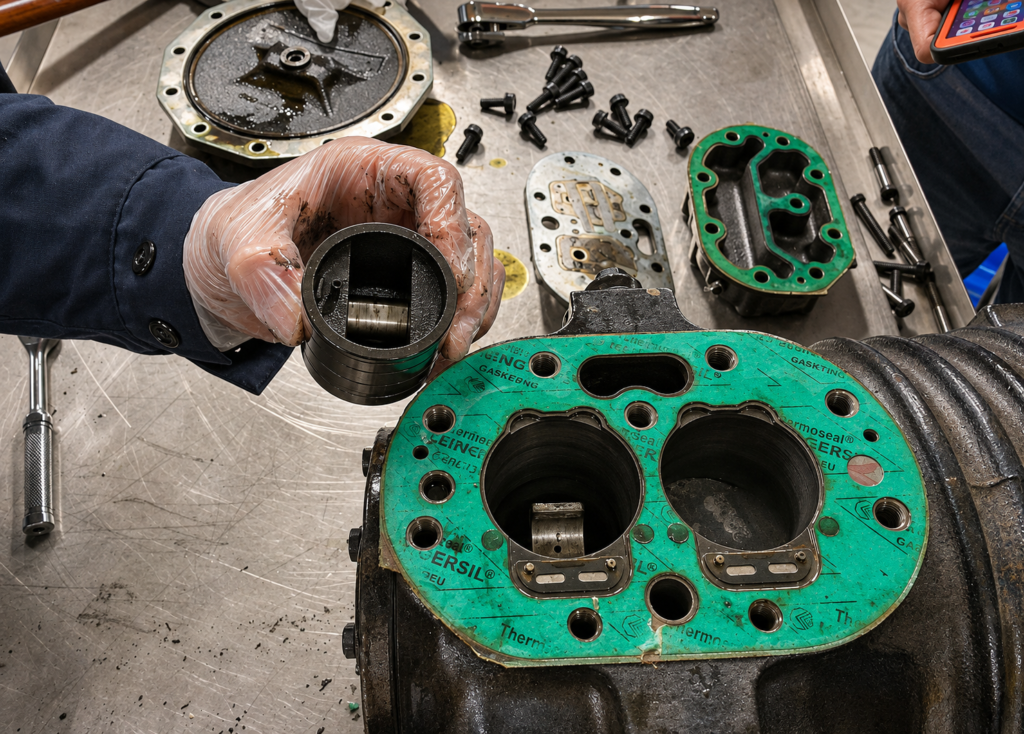
I’ve replaced, cut open, and torn down more failed compressors than I can count. After 35-plus years in this trade, including years as a senior technical trainer at Copeland, here’s what I can tell you: the compressor almost never dies of old age. Something killed it. And if you don’t find out what, the new one is going to die the same way.
A replacement compressor is one of the most expensive repairs a homeowner or business owner will ever pay for. A second failure on that same system, a few months later, is how a company loses a customer for good. That’s why the most important question on a failed-compressor call isn’t “which compressor do I order?” It’s “why did this one fail?”
The compressor is usually the victim
Compressors are built to pump vapor. When something in the system sends them liquid, starves them of oil, overheats them, or feeds them bad power, they eventually give up. The most common killers I see in the field:
- Liquid floodback. Liquid refrigerant returning to the compressor washes the oil off the bearings. Look for low superheat, dirty evaporator coils, bad blower motors, or an oversized or stuck-open metering device.
- Flooded starts. Refrigerant migrates to the compressor during the off cycle and mixes with the oil. On startup, the oil foams and gets pumped out. Missing or failed crankcase heaters are a common culprit.
- Overheating. High compression ratios, high superheat from an undercharge or restriction, and dirty condenser coils all drive discharge temperatures up until the oil breaks down.
- Loss of oil. Long line sets without proper oil return, low charge, or short cycling can leave the compressor running dry.
- Electrical problems. Low or unbalanced voltage, pitted contactors, and failed run capacitors stress the motor windings until they short or open.
- Contamination. Moisture, air, and non-condensables left in the system from poor evacuation create acids that attack the windings from the inside.
Read the evidence before you pull it
The failed compressor is your best witness. Before it goes in the scrap pile, check the windings, look at the oil color and smell it, and note any signs of overheating at the discharge line. Then go back through the system: superheat and subcooling, airflow on both coils, voltage and amperage, the crankcase heater, the contactor, and the capacitor. The failure mode tells you where to look.
Fix the cause, then replace the compressor
Every compressor replacement should end with the root cause corrected: a clean system, a proper evacuation, the right charge, good airflow, and solid electrical. That’s the difference between a repair and a callback.
Want to go deeper? I’m walking through real failure cases in my live webinar, Why HVAC Compressors Fail — And How to Prevent It, on Wednesday, November 18 at 7 PM Eastern.